
For the next month, nearly 40 countries celebrate reading together
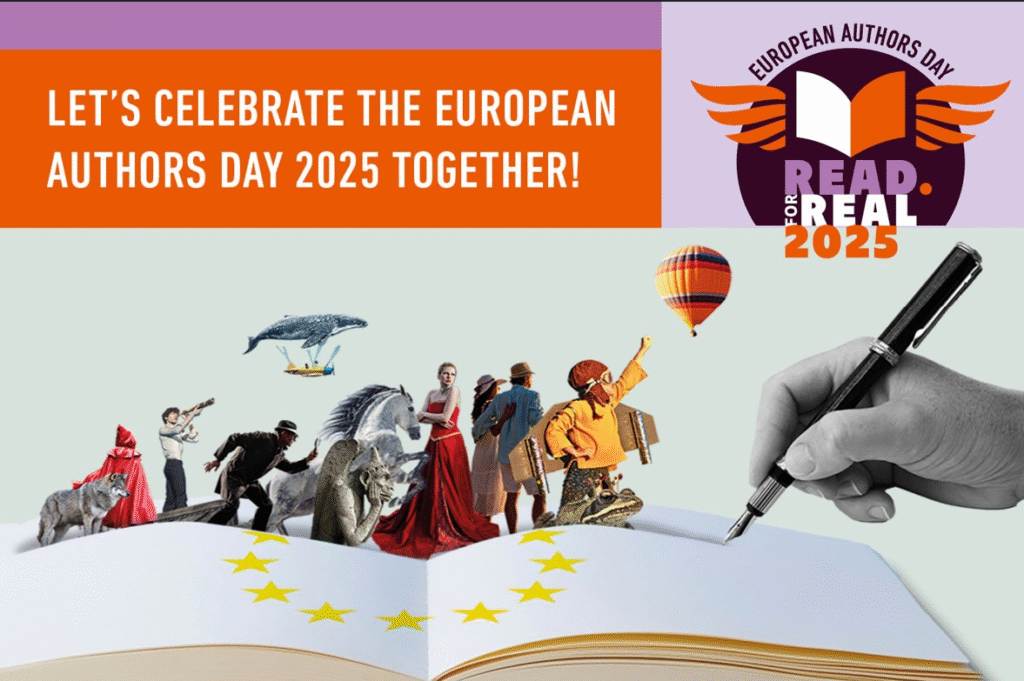
On 11 November, European Authors Day #ReadForReal got under way. For the next month, until 12 December, readers across nearly 40 European countries will celebrate together, honouring literature and the people who create it – through author meetings, events in libraries, schools and towns, and small everyday gestures such as reading together at home or with friends. The projects is coordinated by an international consortium of seven organisations and co-founded by Creative Europe.
One challenge, all of Europe. Across Europe, fewer and fewer people read for pleasure. According to Eurostat, nearly half of the EU population (47.2%) did not read a single book in the past year (1) and one in four working-age adults struggles with reading and writing (2). European Authors Day answers exactly this shared problem: for one month, the whole continent organises reading events and takes part in them, with one voice and under one hashtag. Experiencing literature together, talking with authors, and reading live are all meant to help rekindle the joy of reading and nurture a genuine interest in books – starting with children and young people, since habits formed early are the ones most likely to last a lifetime.
“We work together to create a shared understanding of the value of reading and the need to invest in measures which help our citizens to have a lifelong love of reading. (…) Reading promotion is not just for reading promoters, it is a concern for all of us.” said Elaina Ryan, co chair at EURead, during the EURead AGM in Stockholm, 2026. EURead is one of the partner organisations behind European Authors Day, #ReadforReal.
“Being part of something this big, something recognisable everywhere, is a different experience from acting alone – which is why we’re delighted that, at the same time and under the same hashtag, the whole of Europe is celebrating reading and human creativity. More than twenty thousand organisers and hundreds of thousands of readers across over 40 countries will take part in the celebrations. We’re in this together, even though every single event happens locally – in a library, a school, a bookshop, or simply at home. For the Universal Reading Foundation, it’s an extraordinary privilege to help celebrate the diversity of European literature while building such a powerful shared reading experience.” – says Maria Deskur, President of the Universal Reading Foundation, which leads the European consortium behind the European Authors Day #ReadForReal project.
“We must highlight the human element in reading and books. This is the purpose of the annual celebration of the European Authors Day.” – said Georg Häusler, Director for Culture, Creativity and Sport at the European Commission, speaking in May at the Literacy for Democracy conference – itself one of the project’s pillars, alongside the autumn celebrations and the annual #ReadForEurope workshops.
Everyone is welcome – no exceptions. Authors, illustrators, translators, libraries, schools, kindergartens, bookshops, publishers, companies and local authorities can all take part – organising author meetings, workshops, library lessons, or reading challenges for employees. But #ReadForReal is a project for everyone: anyone can register their own reading activity on the European reading map, even without any institution behind them.
The simplest way to join is the month-long reading challenge (available at www.readforreal.eu) – alone, with friends, with family, or as a team at work. It’s a playful challenge open to all: over the course of the month, it’s worth setting aside even a few minutes a day for reading, talking about books with the people around you, and sharing what you’re currently reading – building a good habit together, and rediscovering that reading shared with others can be a genuine source of joy and connection.
Over 23,500 educators are building good reading habits. More than 23,500 teachers, librarians and other educators have already signed up for this year’s edition, and over the coming weeks will be encouraging children and young people to read together and experience literature live.
The celebrations are open to every generation – including seniors and intergenerational meetings that strengthen ties within local communities – but it is children and young people who receive the organisers’ particular attention. According to the latest PISA 2025 study, one in three 15-year-olds in the European Union (31.3%) fails to reach the minimum level of reading proficiency – meaning they cannot fully understand or make use of a text they’ve read. The European Commission cites this figure among the reasons for a shared, Europe-wide effort on reading. Reading skills are today the foundation of education, critical thinking and resilience to disinformation – which is exactly why it matters to build good reading habits as early as possible.
Superheroes of the celebration. At the very heart of the celebrations are the people who create literature – not only authors, but also translators and illustrators. Through their creativity, they spark imagination and curiosity in readers of every age, and meeting a creator in person often stays with people longer than the book itself.
“Live meetings between authors and readers are a chance to share the emotions that come with reading, and to have conversations that really matter. The children who take part experience the joy of creation and the freeing power of imagination firsthand, along with something just as important: what it means to see things from someone else’s perspective. Reading together, swapping ideas, talking about books – all of that can do more than spark a reading habit. It can shape attitudes, and the kind of people we become, as readers and as writers alike.” – says Zofia Stanecka, Polish author of children’s literature.
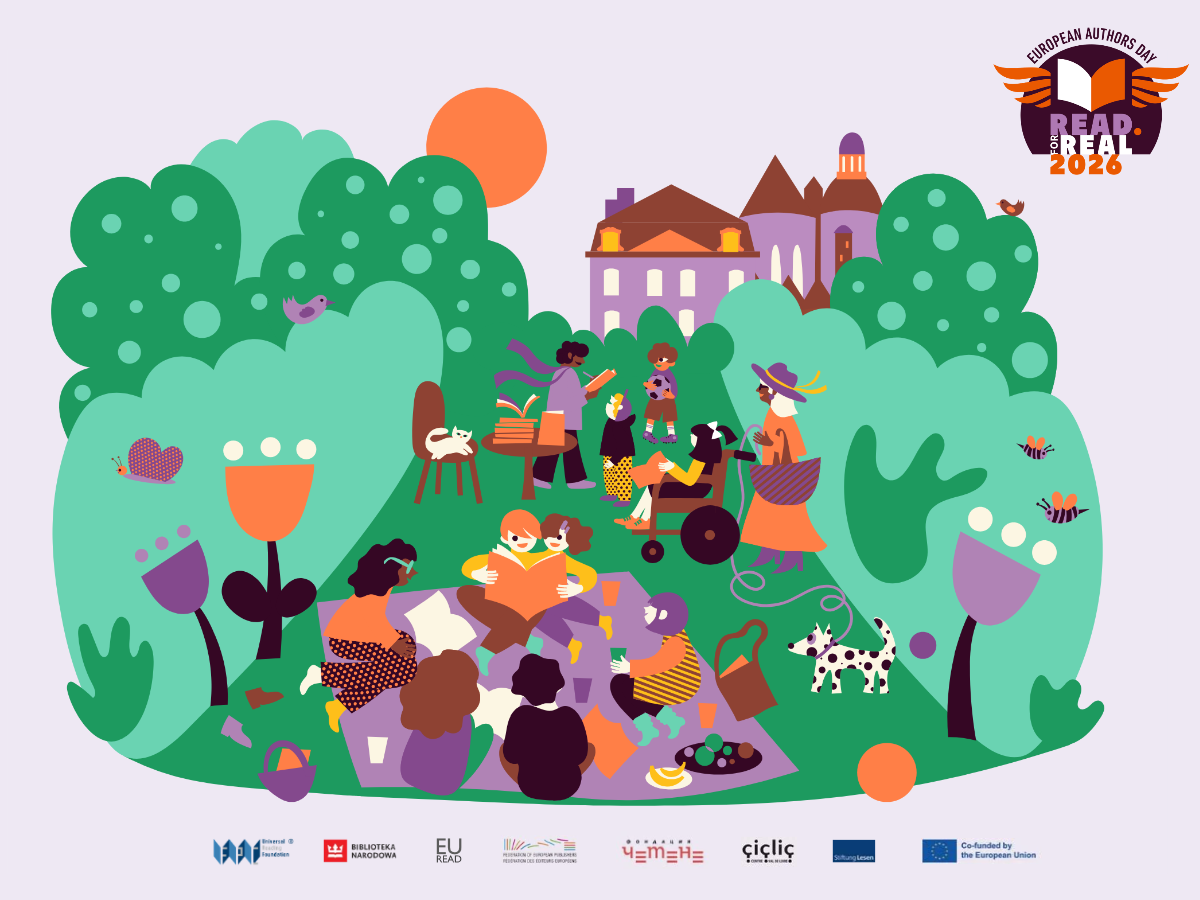
This year’s theme: Friendship & Togetherness. Taking part doesn’t require sticking to any particular theme, but the 2026 edition does have one to draw on for inspiration. This year, it’s friendship and togetherness – an invitation to build real, offline relationships through shared reading and shared emotion around books. At a time when more and more of our connections move online, reading together – as a couple, among friends, or as a whole class – offers a rare chance to truly meet around a shared story.
The European Authors Tour returns: meeting readers across borders. The 2026 edition also marks the return of the European Authors Tour – writers and illustrators are once again travelling across Europe to meet readers abroad. In each country, the tour is coordinated by a national hub, which also provides local support to organisers of events and activities.
“Children’s books deserve to be read just as seriously as any other kind – with full attention, real openness, sinking into the story right up to your ears. This year, as part of European Authors Day, I’m heading to Prague, in the Czech Republic. And as everyone knows, when Poles go to the Czech Republic, they can’t help smiling – especially those of us with a soft spot for literature. Čapek, Hašek, Kafka, Kundera, Škvorecký, Pavel, Hrabal… I left that last one for the end on purpose. Why? Because for more than thirty years now, I’ve been incurably Hrabal-struck. I wonder if there’s even a shred of hope that, after meeting me, some little Petr or little Eliška might walk away a little Kasdepke-struck themselves – for real.” – says Grzegorz Kasdepke, Polish author of children’s and young-adult literature, who will meet readers in Prague as part of the European tour, during the flagship #ReadForReal event in the Czech Republic.
Partners from every corner of the book world – and beyond. Across the countries taking part, European Authors Day draws in a wide mix of organisations beyond the usual libraries, schools and publishers – authors’, booksellers’ and librarians’ associations among them. Poland’s edition offers one example of how far that reach can extend: its main partner this year is Poczta Polska, the national postal operator. In many towns, especially smaller ones, the local post office is often one of the few remaining places to buy a book in person, or to engage with culture at all – its branches are being turned into visible campaign touchpoints, alongside welcome-pack deliveries and reading sessions for children in schools and kindergartens.
“A letter or a postcard connects people all over the world. A book has that same power – and it also builds imagination and broadens horizons. This is another year we’re taking part in #ReadForReal, and we’re doing it with real conviction: we can see how positively the initiative is received by both our staff and our customers. The post office is an important fixture on the cultural map of many towns – you can buy books with us, we organise author meetings, and we support the development of reading.” – says Marek Mąkosa, Vice President of the Management Board of Poczta Polska for Sales.
Join in today. Anyone planning a reading-related activity between 11 November and 12 December – from an author meeting to a private reading challenge among friends – can register it at www.readforreal.eu , and access free downloadable gadgets and promotional materials. Registered events appear on the European reading map, where visitors can see what’s happening locally this autumn and find open events to join.
About the project: European Authors Day #ReadForReal is a pan-European reading initiative, run by a consortium of seven organisations from five countries, led by the Universal Reading Foundation (Poland), in partnership with the National Library of Poland, Stiftung Lesen (Germany), Ciclic Centre-Val de Loire (France), Reading Foundation Bulgaria, the Federation of European Publishers, and EURead. The project was launched in 2023 by the Creative Europe programme of the European Union, which continues to co-fund it. Last year’s edition brought together 6,573 events in 34 countries, with more than 300,000 participants.
www.readforreal.eu, Instagram: @read.forreal | Facebook: READ. for Real
Sources:
[1] Eurostat, EU Statistics on Income and Living Conditions (EU-SILC), ilc_scp27, 2022 data.
[2] European Commission, citing the Survey of Adult Skills, 2023.