
BookStadium is a new project from the Polish Book Institute, which was piloted in 2024. The aim of the project is to promote reading among children aged 9-11 – primarily among boys who don’t read – by combining literature and football.
In Poland, as in other European countries, there is a sharp decline in reading among this age group, with boys being particularly affected. Inspired by the positive experiences and results of overseas projects that use football to promote reading, we decided to transfer these good practices to Poland.
The BookStadium project consists of three main elements:
- We organise reading workshops for football academies. Together with coaches, we uncover for young football enthusiasts the values that shape the sporting spirit. We draw upon books about the football stars with whom young players identify in order to inspire reading and the fulfilment of (not only sporting) dreams. The workshops are accompanied by demonstrations by the world champion in freestyle football, who is not only a great athlete but also an author and an avid reader.
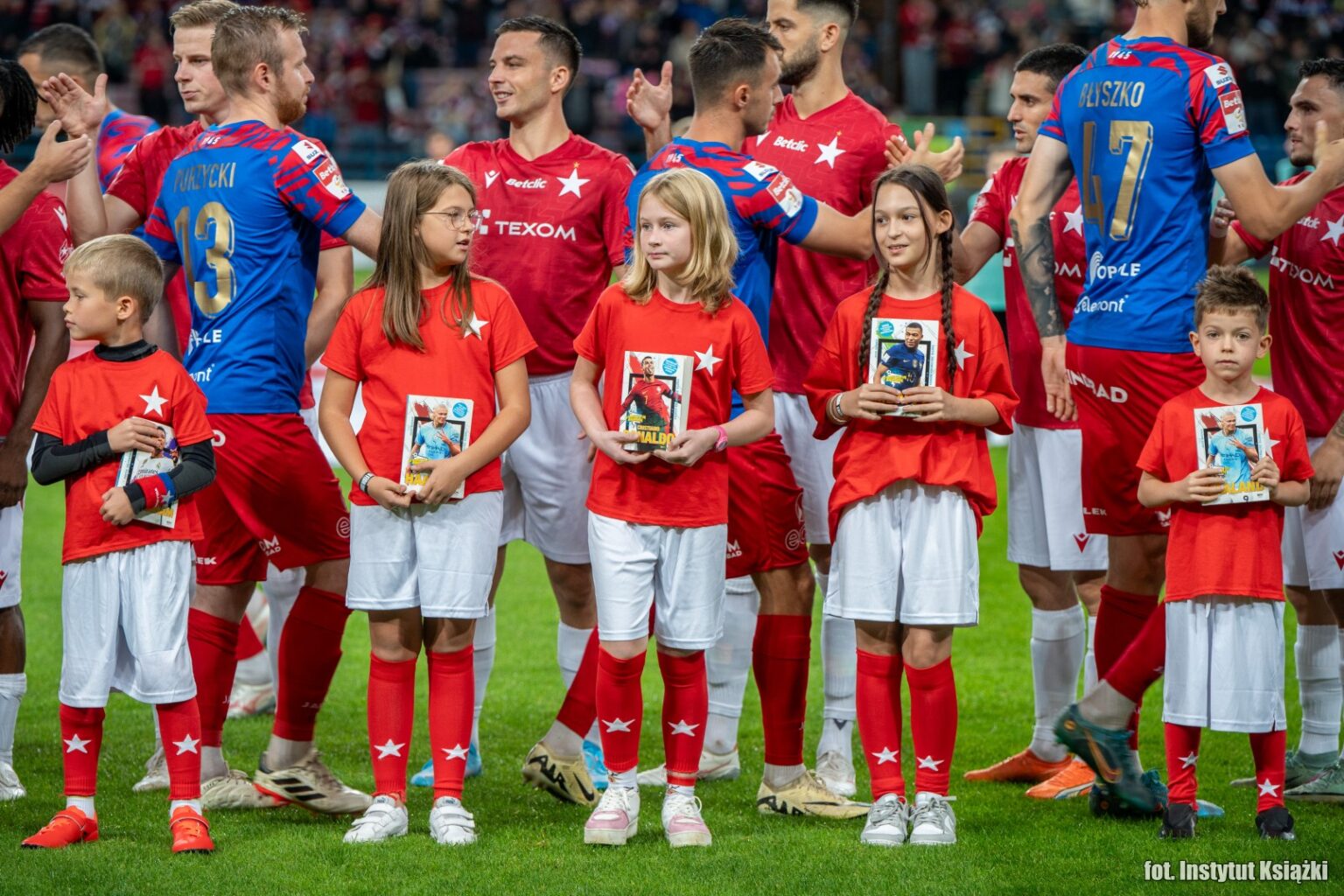
- From football academies we go out onto stadium pitches and meet at league matches. In cooperation with the biggest football clubs in Poland, we organise reading happenings. We organise activities and competitions, we take books with us, we organise freestyle football shows with books, showing that reading can bring as much joy as the ball does during a match.
- We encourage coaches at football academies to promote reading, because we know that they are the authorities for young football enthusiasts, also off the pitch. We have prepared workshop plans for coaches to run in academies, so that they can creatively convince young players that it is worth keeping fit by reading books, too. We have also compiled a list of book recommendations and ideas on how to promote reading through sport in schools and libraries. All this information is available on the project website and social media.
The pilot run involved seven football clubs (both those competing for the national championship and local clubs) and over 200 children participated in the workshops. There were also three reading happenings during league matches, attended by more than 5,000 fans (children and families).