
O PNL/ The Portuguese National Reading Plan
The National Reading Plan is a public institute that designs and implements public reading policies. PNL missions are to offer training, guidelines, resources, tools, assessment and monitoring, as well as initiatives at a national level, working with educational and cultural partners.
Our flagship projects include diagnosis, intervention design, implementation, monitoring and assessment. We prefer bottom-up projects, which means that we have a strong capacity to personalise our interventions. We work closely with research, to contribute to knowledge building on reading, as well as to make sure our actions are research based and locally informed. Plano de Ação para a Leitura is one of our flagship projects.
We also work closely with municipalities and local associations, companies, health providers and other local structures. Local Reading Plans are an example of dialogue with other entities, namely those linked to municipal and regional structures, cultural agents, science and higher education institutions.
PROJECTS
Leitura em família / Reading as a Family
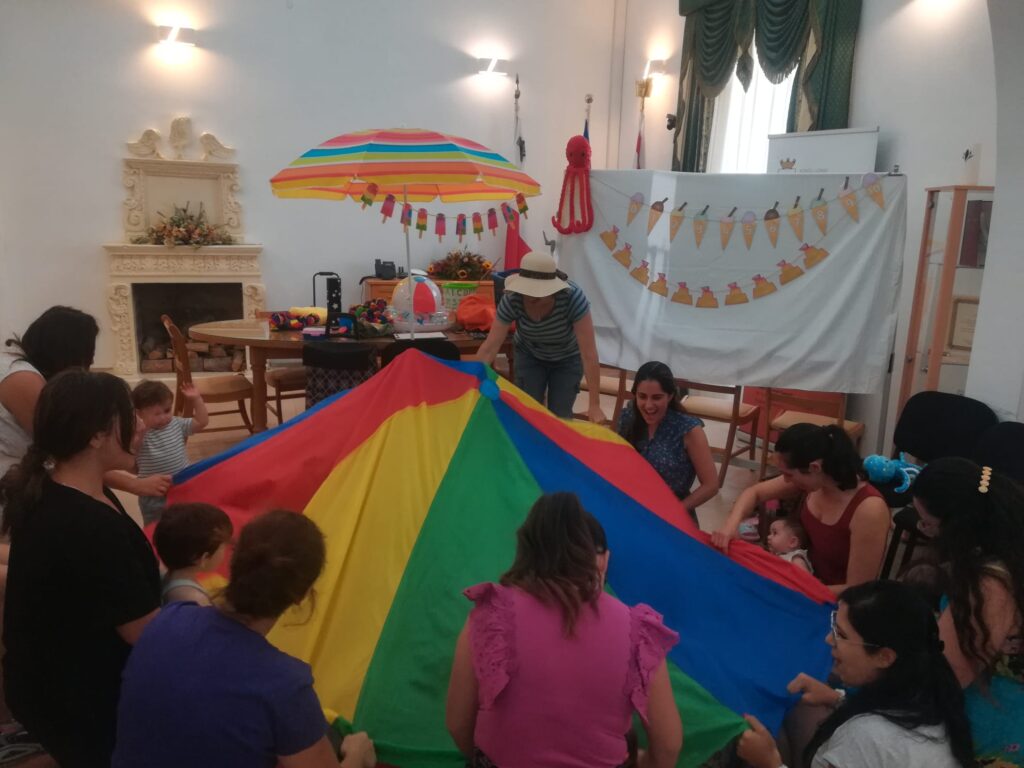
National Reading Plan has developed a program with various initiatives to motivate and to support families and educators in fostering reading habits and creating moments of reading for pleasure with young children. Reading as a Family aims to provide families with awareness, confidence, and practical tools to select titles and reading strategies. In its first year of implementation, the program collaborated with 24 municipalities and one Portuguese school abroad. For the second year, 20 additional regions will join the initiative.
The first phase focused on training teams from each municipality, including a librarian, a teacher-librarian, and a social worker. In addition to the training, these teams diagnosed their local reading habits and access to books, then designed action plans with our guidance. Circa 600 to 1,000 families participated in the first year. Some of these families will receive a Family Library, a collection of books donated by private benefactors, as part of a book gifting initiative.
The Reading as a Family program is based on the principle that family reading is a strong predictor of academic success and a lifelong relationship with books. Reading together fosters essential literacy skills, strengthens family bonds, and establishes positive reading routines.
This program is also associated with Reading + is good for your health (Ler+ dá Saúde). In this project, the PNL collaborates with various health sector partners – such as medical centres, pharmacies, general practioners’ association, and nursing schools – to promote the literacy within families. Healthcare professionals, including doctors, nurses, and pharmacists, offer reading advice to parents and encourage regular reading practices.
Family doctors prescribe books for children, aged 6 to 24 months, during their first consultation in one of the 171 partner health units. This initiative also incorporates book gifting as a means of supporting early childhood literacy.
Plano de Ação para a Leitura (PAL) /Action Plan for Reading
Action Plan for Reading (PAL) initiative addresses reading challenges identified within educational contexts, within the scope of literacy and reading habits. It is a pilot, with 15 schools’ clusters from all over the country. Its intervention, as an in-depth plan, covers 3 years and it includes training, personalised monitoring and funding.
It aims to:
Combat literacy deficits reported in national and international studies, mainly regarding high level comprehension competencies.
Develop targeted reading intervention strategies based on local diagnoses.
Foster sustainable reading communities centred around schools.
The PAL program unfolds in three phases:
Year 1 (2023-24) Diagnosing reading difficulties using assessment tools.
Year 2 (2024-25): Implementing an action plan with PNL guidance.
Year 3 (2025-26): Monitoring progress, evaluating outcomes, and designing future strategies.
By the end of year 3, we’ll have tried and tested tools that will help any school to diagnose, design, implement and assess interventions in reading.
10 minutos a Ler / 10 minutes Reading
To foster a love for reading and cultivate lifelong readers in an era of evolving physical and digital communication, the PNL continues 10 Minutes of Reading initiative in 2025. In the 10 Minutes Reading project, schools are encouraged to incorporate a daily 10-minute reading activity into their routine, at any time and in any school space.
Evaluations from participating schools indicate that this initiative has successfully established a daily reading habit, increased reading motivation, improved fluency and comprehension, enriched vocabulary, and led to a growing demand for books in school libraries.
PNL supports schools to implement this project through funding for buying books and with suggestions to overcome obstacles.
Laboratório PNL / PNL Laboratory
The PNL Lab is an incubator for reading promotion and literacy projects, open to schools, libraries, cultural institutions, universities, researchers, writers, and companies. It supports innovative projects by offering training, financial aid, expert guidance, and networking opportunities. Applications are open year-round, with selection based on category-specific criteria. The PNL Lab provides:
Support in project design and adjustments
Training in specialized areas
Workshops on best practices
Financial support (subject to budget and project validation)
Expert consultations and field visits
Visibility and communication support
Certification upon project completion
Reading Clubs/ PNL supports the organization of reading clubs in schools, universities and companies.
Tutorials on how to form and organise a reading club
Leaflets with practical suggestions
Early funding to buy books for reading clubs
50 LISTAS/ 50 lists
PNL funds schools’ libraries, through the project 50 Lists. Schools apply to funding presenting a list of books they need to update their catalogue. These lists need to present some criteria, such as variety of titles, genres, authors.
Catálogo PNL/PNL Catalogue
Since 2007, PNL has been recommending books to all. Publishers send us a selection of books to be assessed. PNl has a committee of experts that analyse the books and decide if they enter the recommendations list.
Selected books have a seal of approval in their cover. The catalogue can be consulted by anyone on PNL’s portal, according to age group, theme, genre, reading proficiency.
Planos Locais de Leitura (PLL)/ Local Reading Plans
Acknowledging municipalities as key players in developing readers, PNL partners with local governments to strengthen public policies on reading and literacy through Local Reading Plans (PLL), initiated in 2019.
Municipalities sign a Partnership Agreement to develop a tailored reading plan that optimizes local resources and fosters collaboration among schools, libraries, cultural associations, and NGOs. Each municipality oversees the implementation of its PLL, which includes initiatives such as reading clubs, workshops, and cultural events. These plans target various age groups, from children to seniors, aiming to establish sustainable reading policies supported by diverse stakeholders.
Since 2024, PNL has been working on creating a network of local reading plans, by publishing a trimestral newsletter, sharing useful information and best practices. We also offer workshops on specific topics of interest. In 2025, we’ll organise the first national meeting of local reading plans.
Ensino Superior (ES) / Higher Education
To engage higher education institutions in promoting reading and writing, PNL supports initiatives such as literary contests for university students. These contests encourage students to select books and produce written reflections, fostering creativity and appreciation for literature. Universities, with PNL’s support, also organize reading and writing competitions, literary performances, research studies, conferences, workshops, and reading communities.
Additionally, a dedicated website facilitates collaboration among university reading clubs, allowing them to share events, initiatives, and publications. We’ve funded 50 reading clubs across the country and organise, each year, a meeting of reading clubs, to share practices, suggestions and useful information.
Ler+ Qualifica, Ler Maior, IRead4Skills / Reading Plus, Reading Major, IRead4Skills
PNL remains committed to adult literacy and lifelong learning, supporting projects that promote reading among adults. These initiatives provide resources to enhance motivation, share best practices, and recommend books in various formats to meet diverse interests and needs.
Ler+ Qualifica focuses on adults engaged in Recognition, Validation, and Certification of Competencies (RVCC), Adult Education and Training (EFA), or Modular Courses. It fosters reading and writing habits, strengthening literacy skills.
Ler Maior targets individuals over 50, particularly those attending senior universities. It encourages reading and writing, facilitating intergenerational exchange and lifelong learning.
PNL is a partner of the IRead4Skills consortium, a European Commission-funded project aimed at improving adult reading skills through AI-driven tools that assess text complexity and recommend appropriate reading materials, ensuring equitable access to information and culture.
FORMAÇÃO/TRAINING
PNL opened this year the PNL Academy, with two main offers:
Courses for the general public on various reading topics. Each month a different course is offered, free of charge. The authors are authors, editors, illustrators, poets, academics and other reading agents. These live, online courses, offer the possibility to know more about literature, books and specific topics, such as reading images.
Training for teachers. Each year, we offer several training courses, concerning reading didactics, reading promotion, reading in adult training.
PUBLICAÇÕES/RECURSOS – PUBLICATIONS/RESOURCES
Studies
PNL works with research units, to make data available regarding reading habits and reading promotion practices.
In 2024, we’ve published the first Barometer on students’ reading habits. In 2026, we’ll have comparable data that will allow to understand tendencies and progress.
We’re also conducting two qualitative surveys on reading mediators and on families reading habits.
Cadernos PNL/ Notebooks PNL
PNL Notebooks is a didactic publication of the National Reading Plan, designed to explore specific themes in reading promotion and literacy education. Each edition features reflections by authors, case studies, best practices, and reading recommendations on one specific reading topic per volume. The first volume, Reading Mediation: In Search of a Transitional Paradigm, is authored by Roberto Igarza. The second volume is on the 14-20 Reading Movement, focusing on promoting reading and writing among young people aged 14 to 20. The third volume, Reading Clubs, examines reading clubs as educational practices, with flexible and varied adaptations, in primary, secondary, and higher education, as well as some examples in community settings, and workplaces.
Guiões PNL/ PNL Guides
The Reading Plan has been publishing Guides to support teachers to improve their practices regarding reading.
Guide on Individual Reading Projects: a curricular approach to reading promotion regarding extensive reading. This Guide explains how this practice can be better implemented, offers resources and practical activities.
Guide on Reading Poetry: published this year, on International Poetry Day, it helps teachers with choosing different and more varied poems and it suggests reading poetry as a pleasure, and not only to employ analysis’ tools.
Guide on Reading literature in Second language teaching: a guide meant to help teachers with a growing number of immigrant students in schools, with practical activities to read literature regularly in class.
Guides to read the museum: In 2024, we’ve published the 1st Guide, in collaboration with the MACE museum. In 2025, we are preparing a second volume, in collaboration with the Natural Parc Foz Côa and its museum.
LOSA II
Recognizing reading as fundamental to academic success, PNL provides primary and secondary school teachers with structured reading activities.
The Classroom Guided Reading Project – Phase II (LOSA II) provides teachers with instructional materials and methodologies designed to support reading development across all educational levels. These resources are aligned with national curriculum guidelines and address specific reading comprehension difficulties identified in standardized assessments. The project emphasizes:
Exploration of various text genres (e.g., biographies, short stories) across all grade levels.
Progressive development of reading comprehension skills, based on students’ needs.
Teaching strategies tailored to different reading stages, promoting intentional and reflective reading instruction.
14/20 Movimento a Ler – 14/20 Reading Movement
The 14-20 Reading Movement encourages reading and writing among young people aged 14 to 20 by integrating literature with other disciplines such as science, comics, animation, music, theatre, dance, photography, graphic arts, cinema, and urban art. Since 2018, this initiative has supported interdisciplinary projects designed and implemented in collaboration with diverse cultural entities, positioning young people as active participants.
Recognizing the school as a fundamental space for fostering reading skills and motivation, PNL has strengthened its collaboration with school libraries by expanding the Reading Schools network. This program, in partnership with the Rede de Bibliotecas Escolares (School Libraries Network), supports schools with strong reading cultures, focusing on comprehension, reading enjoyment, and writing, while valuing literacy within school communities.
EVENTOS/ EVENTS
Annual Conference
The PNL Annual Conference promotes a meeting of national and international experts, authors, librarians, educators and students to reflect and discuss literacy programmes and reading promotion.
National Reading Week
The National Reading Week is one of the most iconic events at PNL. This event aims to highlight reading promotion across the country. It’s a national endeavour with schools, libraries, bookshops, municipalities and other reading agents.
READING FAIRS & LITERARY FESTIVALS – READING PHARMACY
The PNL are involved in the main Book Fairs (Lisbon and Oporto) and Literary Festivals (FOLIO, AGORA). PNL team offers a Reading Pharmacy at these events, working directly with the general public to recommend books.
Annual Meeting of Reading Clubs
In this meeting, PNL brings together Reading Clubs to promote sharing of good practices and collaborative work.
Annual Prize for Reading at University
With this annual prize for university students, PNL aims to promote the reading for pleasure in higher education. This award aims to foster intellectual development and to increase the literacy levels and critical thinking skills among higher education students, as a way to promote lifelong learning and to enhance students cultural and personal development.
Annual Conference
The PNL Annual Conference promotes a meeting of national and international experts, authors, librarians, educators and students to reflect and discuss literacy programmes and reading promotion.
National Reading Week
The National Reading Week is one of the most iconic events at PNL. This event aims to highlight reading promotion across the country. It’s a national endeavour with schools, libraries, bookshops, municipalities and other reading agents.
READING FAIRS & LITERARY FESTIVALS – READING PHARMACY
The PNL are involved in the main Book Fairs (Lisbon and Oporto) and Literary Festivals (FOLIO, AGORA). PNL team offers a Reading Pharmacy at these events, working directly with the general public to recommend books.
Annual Meeting of Reading Clubs
In this meeting, PNL brings together Reading Clubs to promote sharing of good practices and collaborative work.
Annual Prize for Reading at University
With this annual prize for university students, PNL aims to promote the reading for pleasure in higher education. This award aims to foster intellectual development and to increase the literacy levels and critical thinking skills among higher
Leitura em família / Reading as a Family
National Reading Plan has developed a program with various initiatives to motivate and to support families and educators in fostering reading habits and creating moments of reading for pleasure with young children. Reading as a Family aims to provide families with awareness, confidence, and practical tools to select titles and reading strategies. In its first year of implementation, the program collaborated with 24 municipalities and one Portuguese school abroad. For the second year, 20 additional regions will join the initiative.
The first phase focused on training teams from each municipality, including a librarian, a teacher-librarian, and a social worker. In addition to the training, these teams diagnosed their local reading habits and access to books, then designed action plans with our guidance. Circa 600 to 1,000 families participated in the first year. Some of these families will receive a Family Library, a collection of books donated by private benefactors, as part of a book gifting initiative.
The Reading as a Family program is based on the principle that family reading is a strong predictor of academic success and a lifelong relationship with books. Reading together fosters essential literacy skills, strengthens family bonds, and establishes positive reading routines.
This program is also associated with Reading + is good for your health (Ler+ dá Saúde). In this project, the PNL collaborates with various health sector partners – such as medical centres, pharmacies, general practioners’ association, and nursing schools – to promote the literacy within families. Healthcare professionals, including doctors, nurses, and pharmacists, offer reading advice to parents and encourage regular reading practices.
Family doctors prescribe books for children, aged 6 to 24 months, during their first consultation in one of the 171 partner health units. This initiative also incorporates book gifting as a means of supporting early childhood literacy.
Plano de Ação para a Leitura (PAL) /Action Plan for Reading
Action Plan for Reading (PAL) initiative addresses reading challenges identified within educational contexts, within the scope of literacy and reading habits. It is a pilot, with 15 schools’ clusters from all over the country. Its intervention, as an in-depth plan, covers 3 years and it includes training, personalised monitoring and funding.
It aims to:
- Combat literacy deficits reported in national and international studies, mainly regarding high level comprehension competencies.
- Develop targeted reading intervention strategies based on local diagnoses.
- Foster sustainable reading communities centred around schools.
The PAL program unfolds in three phases:
- Year 1 (2023-24) Diagnosing reading difficulties using assessment tools.
- Year 2 (2024-25): Implementing an action plan with PNL guidance.
- Year 3 (2025-26): Monitoring progress, evaluating outcomes, and designing future strategies.
By the end of year 3, we’ll have tried and tested tools that will help any school to diagnose, design, implement and assess interventions in reading.
10 minutos a Ler / 10 minutes Reading
To foster a love for reading and cultivate lifelong readers in an era of evolving physical and digital communication, the PNL continues 10 Minutes of Reading initiative in 2025. In the 10 Minutes Reading project, schools are encouraged to incorporate a daily 10-minute reading activity into their routine, at any time and in any school space.
Evaluations from participating schools indicate that this initiative has successfully established a daily reading habit, increased reading motivation, improved fluency and comprehension, enriched vocabulary, and led to a growing demand for books in school libraries.
PNL supports schools to implement this project through funding for buying books and with suggestions to overcome obstacles.
Laboratório PNL / PNL Laboratory
The PNL Lab is an incubator for reading promotion and literacy projects, open to schools, libraries, cultural institutions, universities, researchers, writers, and companies. It supports innovative projects by offering training, financial aid, expert guidance, and networking opportunities. Applications are open year-round, with selection based on category-specific criteria. The PNL Lab provides:
- Support in project design and adjustments
- Training in specialized areas
- Workshops on best practices
- Financial support (subject to budget and project validation)
- Expert consultations and field visits
- Visibility and communication support
- Certification upon project completion
Reading Clubs/ PNL supports the organization of reading clubs in schools, universities and companies.
- Tutorials on how to form and organise a reading club
- Leaflets with practical suggestions
- Early funding to buy books for reading clubs
50 LISTAS/ 50 lists
PNL funds schools’ libraries, through the project 50 Lists. Schools apply to funding presenting a list of books they need to update their catalogue. These lists need to present some criteria, such as variety of titles, genres, authors.
Catálogo PNL/PNL Catalogue
Since 2007, PNL has been recommending books to all. Publishers send us a selection of books to be assessed. PNl has a committee of experts that analyse the books and decide if they enter the recommendations list.
Selected books have a seal of approval in their cover. The catalogue can be consulted by anyone on PNL’s portal, according to age group, theme, genre, reading proficiency.
Planos Locais de Leitura (PLL)/ Local Reading Plans
Acknowledging municipalities as key players in developing readers, PNL partners with local governments to strengthen public policies on reading and literacy through Local Reading Plans (PLL), initiated in 2019.
Municipalities sign a Partnership Agreement to develop a tailored reading plan that optimizes local resources and fosters collaboration among schools, libraries, cultural associations, and NGOs. Each municipality oversees the implementation of its PLL, which includes initiatives such as reading clubs, workshops, and cultural events. These plans target various age groups, from children to seniors, aiming to establish sustainable reading policies supported by diverse stakeholders.
Since 2024, PNL has been working on creating a network of local reading plans, by publishing a trimestral newsletter, sharing useful information and best practices. We also offer workshops on specific topics of interest. In 2025, we’ll organise the first national meeting of local reading plans.
Ensino Superior (ES) / Higher Education
To engage higher education institutions in promoting reading and writing, PNL supports initiatives such as literary contests for university students. These contests encourage students to select books and produce written reflections, fostering creativity and appreciation for literature. Universities, with PNL’s support, also organize reading and writing competitions, literary performances, research studies, conferences, workshops, and reading communities.
Additionally, a dedicated website facilitates collaboration among university reading clubs, allowing them to share events, initiatives, and publications. We’ve funded 50 reading clubs across the country and organise, each year, a meeting of reading clubs, to share practices, suggestions and useful information.
Ler+ Qualifica, Ler Maior, IRead4Skills / Reading Plus, Reading Major, IRead4Skills
PNL remains committed to adult literacy and lifelong learning, supporting projects that promote reading among adults. These initiatives provide resources to enhance motivation, share best practices, and recommend books in various formats to meet diverse interests and needs.
Ler+ Qualifica focuses on adults engaged in Recognition, Validation, and Certification of Competencies (RVCC), Adult Education and Training (EFA), or Modular Courses. It fosters reading and writing habits, strengthening literacy skills.
Ler Maior targets individuals over 50, particularly those attending senior universities. It encourages reading and writing, facilitating intergenerational exchange and lifelong learning.
PNL is a partner of the IRead4Skills consortium, a European Commission-funded project aimed at improving adult reading skills through AI-driven tools that assess text complexity and recommend appropriate reading materials, ensuring equitable access to information and culture.
FORMAÇÃO/TRAINING
PNL opened this year the PNL Academy, with two main offers:
- Courses for the general public on various reading topics. Each month a different course is offered, free of charge. The authors are authors, editors, illustrators, poets, academics and other reading agents. These live, online courses, offer the possibility to know more about literature, books and specific topics, such as reading images.
- Training for teachers. Each year, we offer several training courses, concerning reading didactics, reading promotion, reading in adult training.